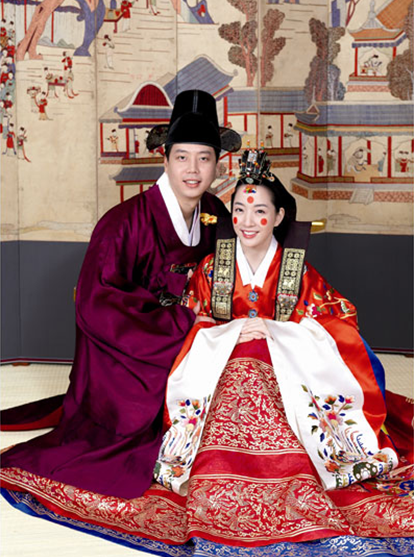
The traditional Korean wedding is held at the bride’s family home. Vows are taken in a ceremony called kunbere: Bride and groom bow to each other and seal their vow by sipping a special wine poured into a gourd grown by the bride’s mother.
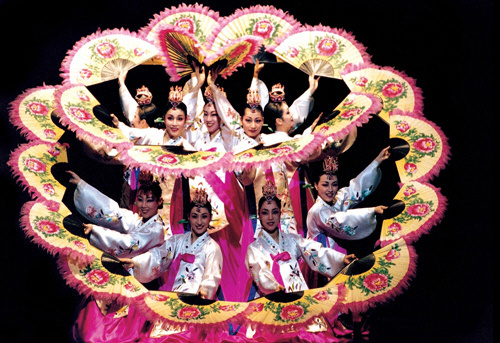
Traditional Korean dance may be divided into four general categories: court dance, folk dance, ritual dance, and the dance of professional entertainers.
Court dances are slow, stately, and elegant, the movements balanced and restrained.
Folk dance includes farmers’ dances, mask dance-dramas, and various group dances meant to accompany work.
Ritual dance appears in Confucian, shamanistic, and Buddhist ceremonies.
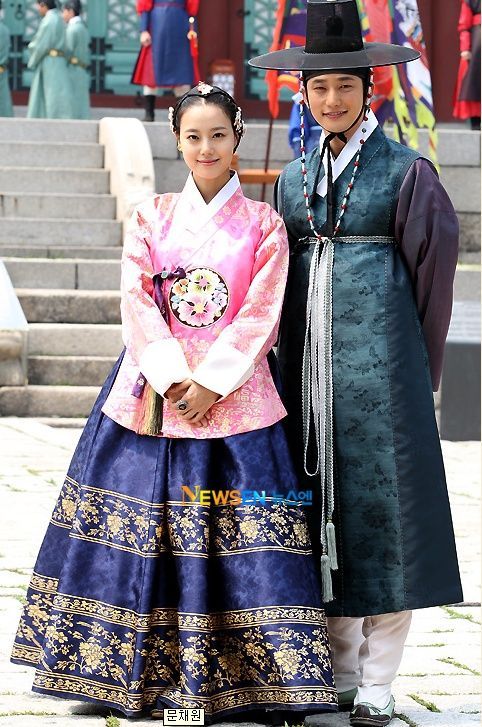
“Hanbok” (also called “joseonot”) is a collective term for traditional Korean clothing. Though there have been slight changes in hanbok over time in terms of material, preferred colors, and the length of the skirt or jacket, the hanbok’s basic format has more or less remained the same for the past 1,600 years.
Hanbok can be classified into ceremonial and everyday dress, each of which can be further classified by gender, age and season. All types of hanbok are created beautifully through combinations of straight and slightly curved lines. Women’s hanbok in particular are recognized worldwide for the simple yet delightful harmony of their short jackets and full skirts. The jacket, which is put on one arm at a time, makes the upper body look very small, while the skirt worn wrapped around the waist makes the lower body look full, creating an attractive balance. The cut and drape of the clothing complements not only the Korean female physique but also flatters and fits most other body types as well.
 heilas blog